Language


More Language
Language The large-diameter stainless steel dual plate check valve is a high-performance non-return fluid control component engineered for large-scale industrial pipeline systems, whose core function is to prevent medium reverse flow, mitigate water hammer damage, and safeguard the safe, stable and efficient operation of entire pipeline networks.
What is a large-diameter stainless steel dual plate check valve?
The large-diameter stainless steel dual plate check valve is a high-performance non-return fluid control component engineered for large-scale industrial pipeline systems, whose core function is to prevent medium reverse flow, mitigate water hammer damage, and safeguard the safe, stable and efficient operation of entire pipeline networks. Fabricated from high-grade stainless steel alloys and featuring an optimized compact dual-disc pivot structure, this valve type is widely deployed in critical industrial sectors including seawater desalination, oil & gas exploration and transportation, municipal water supply and drainage, thermal and nuclear power generation, chemical processing, and industrial water treatment—particularly for DN300 to DN1200 large-diameter pipeline scenarios with high flow rates, corrosive media, or stringent pressure stability requirements.
Compared with traditional swing check valves, the large-diameter stainless steel dual plate check valve exhibits superior structural rigidity, lower flow resistance, and reliable non-slam closing performance, making it the optimal technical solution for modern large-scale industrial infrastructure projects. This paper elaborates on its core technical characteristics, compliant international and industry standards, and a scientific, scenario-based selection methodology, providing professional and systematic technical guidance for engineering design, procurement, construction and operation maintenance.
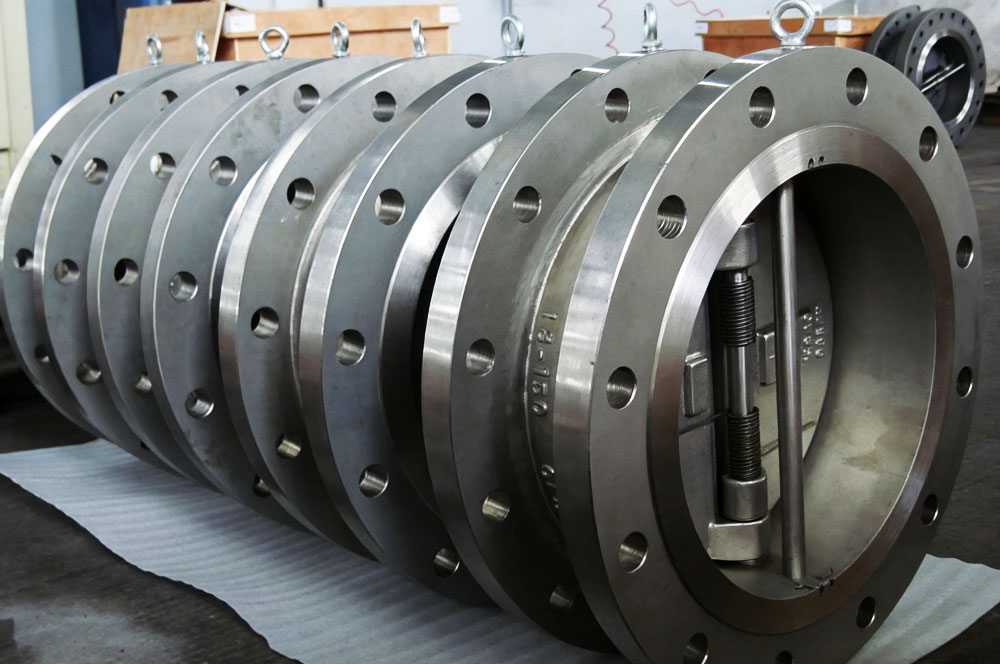
Core Technical Characteristics of Large-Diameter Stainless Steel Dual Plate Check Valve
The superior performance of the large-diameter stainless steel dual plate check valve is derived from its optimized structural design and high-precision material selection, which effectively addresses the pain points of large-diameter pipeline systems such as high pressure loss, severe water hammer effect, and poor corrosion resistance of traditional non-return valves. Its core technical characteristics are as follows:
1. High-Grade Stainless Steel Material System & Excellent Corrosion Resistance
- Grading material selection: 304 stainless steel (1.4301) for general non-corrosive media transmission; 316/316L stainless steel (1.4401/1.4404) for mild corrosive media including municipal sewage and industrial process water; 2205 duplex stainless steel (1.4462) and 2507 super duplex stainless steel (1.4410) for highly corrosive media such as seawater, brine and chemical wastewater with high chloride ion content.
- Material performance advantages: All selected stainless steel alloys possess excellent resistance to pitting corrosion, crevice corrosion and chloride stress corrosion cracking (SCC); duplex and super duplex stainless steel further achieve a perfect balance between high mechanical strength (yield strength ≥450MPa) and corrosion resistance, which is suitable for high-pressure and corrosive working conditions of large-diameter pipelines.
- Surface anti-corrosion treatment: For carbon steel composite valve bodies, internal and external fusion-bonded epoxy (FBE) anti-corrosion coating is adopted; all stainless steel surfaces undergo passivation treatment, which not only enhances the inherent corrosion resistance of the material but also meets the health and safety standards for food-grade and drinking water supply systems (NSF/ANSI 61).
2. Optimized Dual-Disc Structure & Superior Hydraulic Performance
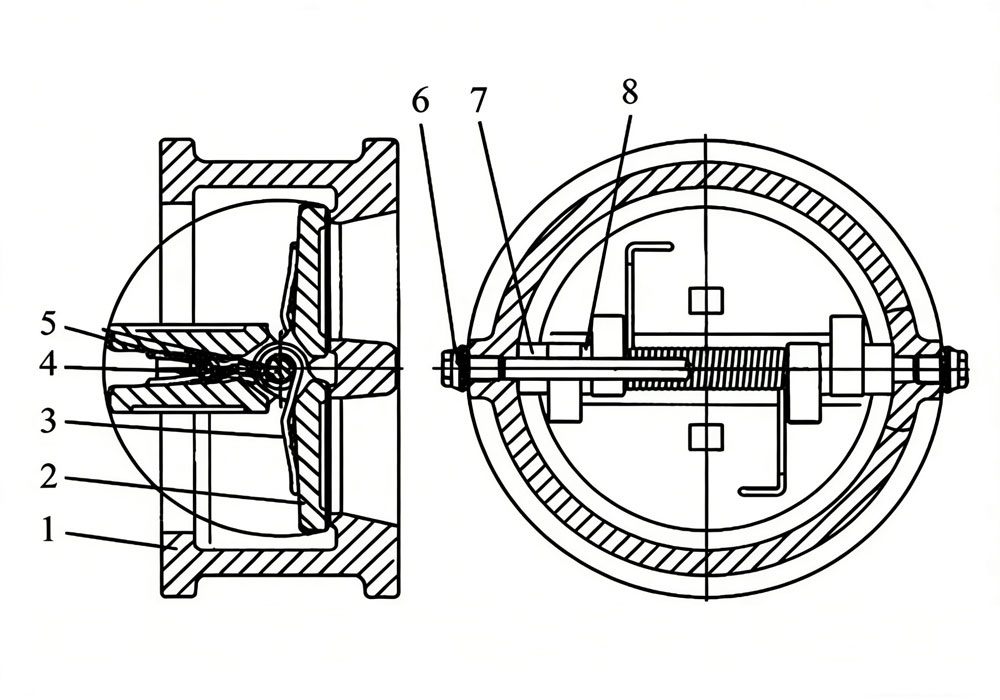
- Core structural design: Adopts a split-type dual-disc structure with a central stainless steel pivot, and the disc assembly is connected to the valve body via torsion springs. The valve realizes automatic opening and closing driven by medium flow and gravity without external actuation, which simplifies the pipeline system configuration.
- Low flow resistance & high efficiency: The full-bore flow path design with streamlined disc profile minimizes the local resistance of the valve, and its flow coefficient (Cv value) is 15%~20% higher than that of traditional swing check valves, which effectively reduces the energy consumption of booster pumps and improves the overall operation efficiency of large-diameter pipeline systems.
- Reliable non-slam closing performance: The torsion spring-assisted dual-disc closing design enables fast and smooth valve closure (closing time ≤0.5s for large-diameter models), which can effectively eliminate the water hammer effect caused by sudden medium reverse flow and protect downstream pipeline equipment such as pumps, meters and pipe fittings from pressure surge damage.
3. Reinforced Structural Design & Adaptability to Large-Diameter Working Conditions
- High-rigidity valve body design: The valve body is manufactured by precision casting or forging process, and integrated reinforcing ribs are arranged at the connection between the flange and the valve body. This design ensures the structural stability of the valve under the combined action of high pressure (PN16/PN25/Class 150/Class 300) and large-diameter (DN300~DN1200) working conditions, and avoids valve body deformation or flange seal leakage caused by pressure stress.
- Diversified connection modes: Two mainstream connection modes are available for large-diameter models—wafer type (suitable for DN300~DN600, characterized by compact structure, small installation space and high assembly efficiency, applicable to compact pipeline equipment rooms) and flange type (suitable for DN600~DN1200, with high connection rigidity, easy installation and maintenance, and fully compliant with ASME B16.5/EN 1092-1 international flange standards).
- Integrated hoisting structure: For large-diameter models (DN800~DN1200), integrated lifting lugs are pre-installed on the valve body, which facilitates the hoisting and installation of heavy valves in large-scale engineering construction, improves the construction safety factor and installation efficiency.
4. Modular Design & Long Service Life With Low Maintenance Cost
- Modular internal components: The dual disc, torsion spring, pivot and other core internal components are designed as independent modular assemblies, which can be easily disassembled, inspected and replaced without removing the entire valve from the pipeline, thus significantly reducing the maintenance downtime and operation and maintenance costs of the pipeline system.
- Wear-resistant and leak-tight sealing pair: According to the characteristics of the transmitted medium, the disc sealing surface can be configured with stainless steel hard sealing (Stellite surfacing welding) or non-metallic soft sealing (EPDM/PTFE). Hard sealing is suitable for high-temperature, high-pressure and abrasive media working conditions, while soft sealing can achieve bubble-tight sealing performance (ANSI Class IV/ISO 5208 Class A).
- Long service life and high reliability: All moving parts including pivot and spring are made of corrosion-resistant stainless steel, which effectively avoids wear, jamming and failure caused by medium corrosion; the designed service life of the valve is ≥15 years, and the number of reliable opening and closing cycles is ≥50,000 times, which fully meets the long-term continuous operation requirements of industrial projects.
5. Versatile Installation Adaptability & Harsh Environment Resistance
- Flexible installation orientation: The valve is suitable for horizontal, vertical (medium flow upward) and inclined pipeline installation. For vertical installation working conditions, only the stiffness of the torsion spring needs to be slightly adjusted, which can adapt to the diverse pipeline layout requirements of large-scale industrial projects.
- Wide temperature and pressure adaptation range: The standard working temperature range is -40℃~200℃, and special high-temperature models can be customized to adapt to -60℃~300℃ working conditions; the working pressure rating covers PN10~PN40/Class 150~Class 300, which can meet the pressure requirements of most industrial large-diameter pipeline systems.
- Excellent harsh environment adaptability: The all-stainless steel valve body and sealed bearing structure enable the valve to resist the erosion of coastal salt spray, industrial corrosive gas and high humidity environment, and it is suitable for onshore, offshore and outdoor open-air installation scenarios such as seawater desalination plants and offshore oil platforms.
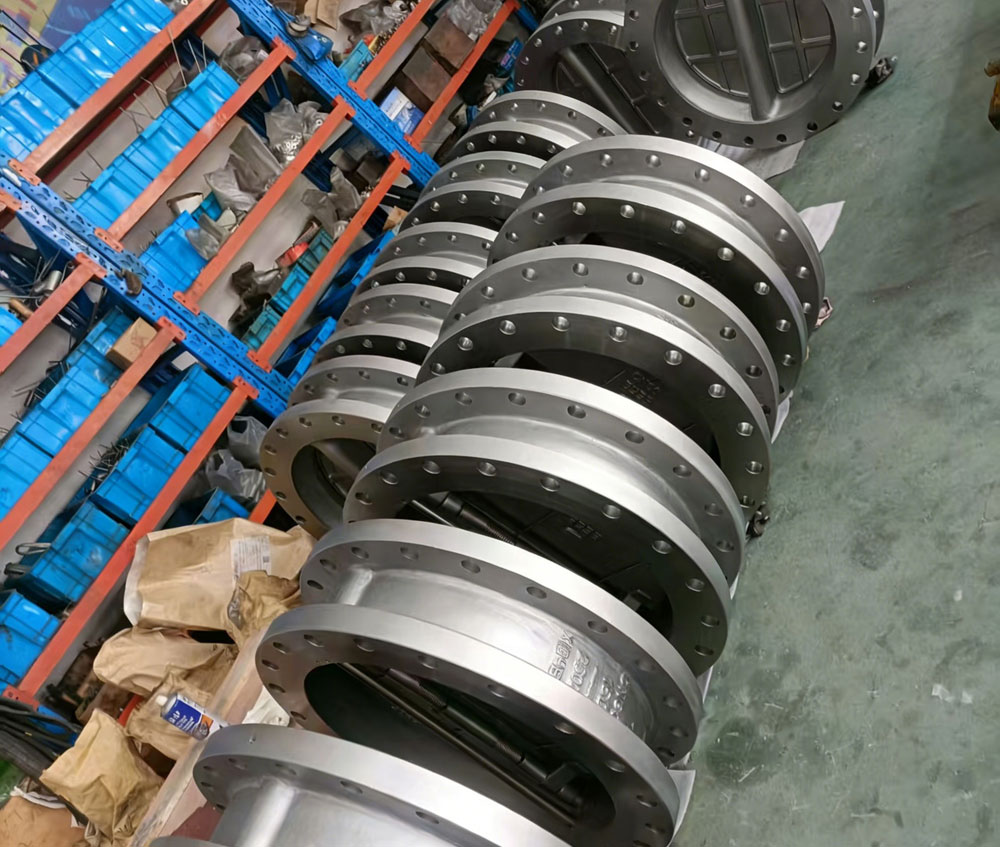
Compliant Industry Standards & Specifications for Large-Diameter Stainless Steel Dual Plate Check Valve
The design, manufacturing, testing, inspection and installation of large-diameter stainless steel dual plate check valves must strictly comply with international, regional and industry-specific standards and specifications to ensure product quality, interchangeability, and the safe and reliable operation of the pipeline system. The core compliant standards cover design and dimensional standards, material quality standards, testing and inspection standards, and industry-specific application standards, as detailed below:
1. International Core Design & Dimensional Standards
- API 6D (American Petroleum Institute): Pipeline Valves—This standard specifies the design, manufacturing, testing, marking and packaging requirements of valves for oil, gas and petrochemical pipeline systems, and is the core compliance standard for large-diameter valves in the energy industry.
- ISO 5752 (International Organization for Standardization): Face-to-face and centre-to-face dimensions of metal valves—This standard unifies the installation dimension specifications of large-diameter check valves, ensuring the interchangeability of the valve with other brands of valves and pipeline components.
- API 609 (American Petroleum Institute): Butterfly Valves and Lug-Type Check Valves—This standard clearly specifies the design, performance, testing and material requirements of dual plate check valves, including key performance indicators such as non-slam closing, pressure loss and structural rigidity.
- EN 12266-1 (European Committee for Standardization): Industrial valves - Pressure testing - Part 1: Test procedures, test pressure and inspection of valves—This is the core regional standard for European valve pressure testing and quality inspection, which specifies the test methods and acceptance criteria for valve shell pressure test and seal test.
2. High-Quality Material Standards
- ASTM International Standards: ASTM A351 (Cast austenitic stainless steel for pressure-containing parts of valves, flanges and fittings), ASTM A182 (Forged stainless steel and alloy steel flanges, forged fittings and valves for pressure-containing applications), ASTM A240 (Stainless steel and heat-resisting steel plate, sheet and strip for pressure-containing applications)—These standards govern the chemical composition, mechanical properties, casting/forging processes and quality inspection requirements of stainless steel valve bodies, discs and flanges.
- EN 10213 (European Standard): Cast steels for pressure purposes—This standard specifies the material grade, chemical composition, mechanical properties and heat treatment requirements of cast steel for pressure-containing parts of European regional industrial valves.
- GB/T 12238 (National Standard of the People's Republic of China): Industrial valves - Dual plate check valves—This is the domestic core design and material standard for dual plate check valves, which is applicable to the design, manufacturing and inspection of dual plate check valves for domestic engineering projects.
3. Rigorous Testing & Inspection Standards
- ISO 5208 (International Organization for Standardization): Industrial valves - Pressure testing of valves—This is the global universal valve testing standard, which specifies the test methods, test pressure, acceptance criteria and test procedures of valve shell pressure test, seal test and operation test.
- API 598 (American Petroleum Institute): Valve Inspection and Testing—This standard details the comprehensive inspection and testing procedures for oil and gas industry valves, including hydrostatic test, pneumatic test, visual inspection, dimensional inspection and material verification.
- ASME B16.34 (American Society of Mechanical Engineers): Valves—Flanged, Threaded, and Welded Ends—This standard specifies the pressure-temperature rating, material compatibility, structural design and marking requirements of industrial valves, ensuring the safe operation of valves under different temperature and pressure working conditions.
4. Industry-Specific Application Standards
- Water treatment & seawater desalination industry: NSF/ANSI 61 (Drinking water system components—Health effects), ISO 14001 (Environmental management systems)—Ensure that the valve meets the health and safety requirements for drinking water supply and the environmental protection requirements for water treatment projects.
- Oil & gas industry: NACE MR0175/ISO 15156 (Petroleum and natural gas industries - Materials for use in H2S-containing environments in oil and gas production)—For valves used in sour gas (H2S-containing) pipeline systems, prevent sulfide stress corrosion cracking (SSCC) of valve materials.
- Power generation industry: ASME BPVC (Boiler and Pressure Vessel Code)—For valves used in thermal power and nuclear power plant pipeline systems, meet the high-temperature, high-pressure and high-reliability safety requirements of power generation equipment.
- Municipal engineering industry: AWWA C508 (American Water Works Association—Check Valves for Water and Wastewater Service)—This standard specifies the design, performance, material and testing requirements of check valves for municipal water supply and drainage systems, focusing on the reliability and long service life of the valve.
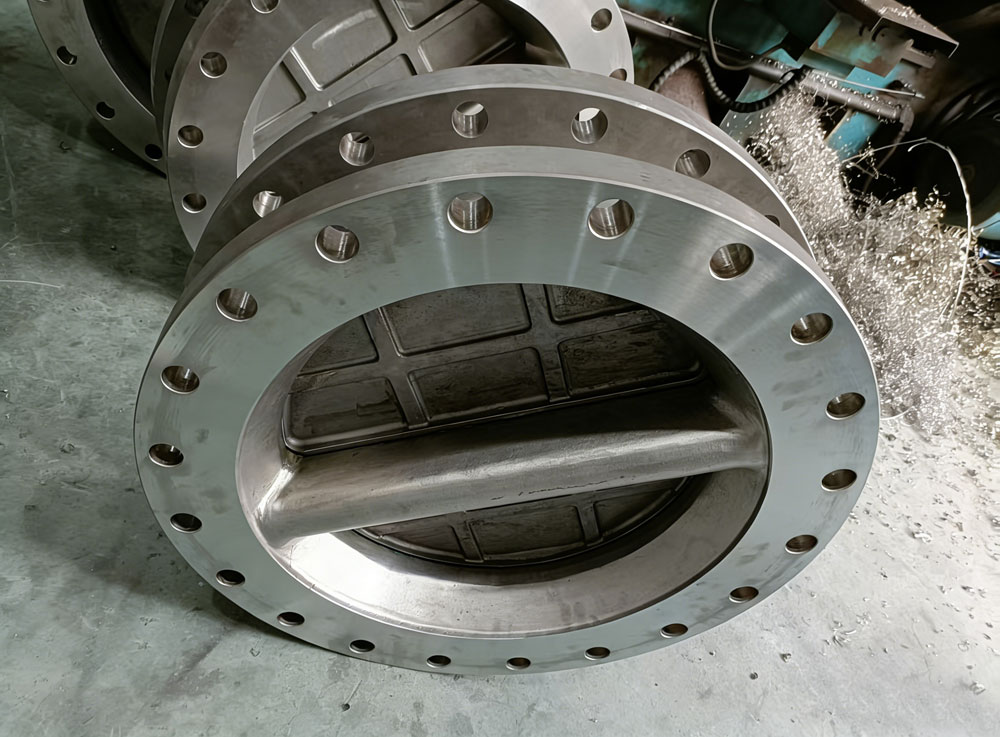
Professional Selection Criterion for Large-Diameter Stainless Steel Dual Plate Check Valve
The scientific selection of large-diameter stainless steel dual plate check valves matching specific application scenarios is the key to ensuring the safe, efficient and long-term operation of pipeline systems. The selection process must be based on pipeline basic design parameters, medium physical and chemical characteristics, actual operating conditions, on-site installation constraints and industry-specific compliance requirements, and follow a systematic, step-by-step professional selection methodology. The detailed selection criterion and key considerations are as follows:
Step 1: Confirm the Basic Nominal Parameters of the Valve Based on Pipeline Design Data
The first step of selection is to determine the core nominal parameters of the valve according to the pipeline process design drawings and hydraulic calculation data, which is the foundation of the entire selection work:
1. Nominal Diameter (DN): Strictly match the actual inner diameter of the large-diameter pipeline (DN300~DN1200); for reduced-diameter pipeline design, the valve DN should be selected according to the actual effective flow section, and over-sizing selection should be avoided to prevent valve jamming caused by low medium flow velocity.
2. Nominal Pressure (PN/Class): Based on the maximum working pressure (MOP) of the pipeline, select the valve pressure rating with a 25% safety margin; the common pressure ratings for large-diameter models are: PN16/Class 150 (suitable for municipal water supply, low-pressure industrial process water), PN25/Class 300 (suitable for oil & gas transportation, high-pressure seawater desalination).
3. Connection Mode: According to the pipeline installation space and construction technical requirements, select wafer type (DN300~DN600, compact installation, low engineering cost) or flange type (DN600~DN1200, high connection rigidity, easy maintenance); ensure that the valve flange standard (ASME B16.5/EN 1092-1/GB/T 9119) is fully consistent with the pipeline flange standard to avoid installation mismatch.
Step 2: Select the Valve Material System Based on the Physical and Chemical Characteristics of the Transmitted Medium
Material selection is the core link to prevent valve corrosion, wear and premature failure—the valve material system must achieve full compatibility with the physical and chemical characteristics of the transmitted medium. The classification of media types and corresponding material selection criteria are as follows:
Medium Category | Key Physical and Chemical Characteristics | Recommended Stainless Steel Material | Optimal Sealing Pair Type |
Non-corrosive medium | Freshwater, tap water, industrial cooling water; no chloride ions, low abrasion | 304 stainless steel (1.4301) | EPDM soft sealing |
Mild corrosive medium | Municipal sewage, low-chloride process water, crude oil; chloride ion content <200ppm, slight abrasion | 316/316L stainless steel (1.4401/1.4404) | EPDM/PTFE soft sealing |
Highly corrosive medium | Seawater, brine, desalination concentrate; chloride ion content >10,000ppm, strong corrosivity | 2205 duplex stainless steel (1.4462)/2507 super duplex stainless steel (1.4410) | Stellite hard sealing/PTFE soft sealing |
Chemical medium | Acid/alkali wastewater, chemical reagents; strong corrosivity, high temperature volatility | 2507 super duplex stainless steel/Hastelloy C276 (customized) | PTFE soft sealing |
Abrasive medium | Industrial sludge, sand-containing water, ore pulp; high solid particle content, severe abrasion | 316L stainless steel + wear-resistant ceramic coating | Stellite hard sealing |
Key Technical Note: For valves used in oil & gas pipeline systems transporting media containing hydrogen sulfide (H2S), the selected valve materials must strictly comply with NACE MR0175/ISO 15156 standards to prevent sulfide stress corrosion cracking (SSCC) of the valve body and internal components.
Step 3: Optimize the Valve Structural Design According to the Actual Operating Conditions
The actual operating conditions (temperature, flow velocity, flow state) of the pipeline directly affect the performance and service life of the valve—according to the specific operating conditions, the valve's structural design and auxiliary components should be optimized and customized:
1. Working Temperature Adaptation:
- Low-temperature working conditions (<0℃, such as municipal pipelines in cold regions): Select low-temperature resistant stainless steel (316L LT) and low-temperature resistant EPDM/NBR sealing materials, and add anti-freezing drain holes on the valve body to avoid valve freezing and cracking caused by medium icing.
- High-temperature working conditions (>120℃, such as power plant steam condensate pipelines): Adopt stainless steel hard sealing (Stellite surfacing welding) and high-temperature resistant Inconel torsion springs, and the valve design must comply with the pressure-temperature rating requirements of ASME B16.34.
2. Flow Velocity & Flow State Adaptation:
- High flow velocity working conditions (>3m/s, such as large-diameter municipal water supply main pipelines): Prioritize selecting valves with full-bore flow path design and low flow resistance to reduce pipeline pressure loss and booster pump energy consumption.
- Turbulent flow/reverse flow high-risk working conditions (such as pump outlet pipelines): Select valves with enhanced spring-assisted non-slam closing design to eliminate the water hammer effect; for extreme working conditions, it is recommended to configure a water hammer buffer tank in series to further improve the safety of the pipeline system.
3. Continuous Operation Adaptation: For 24/7 continuous operation working conditions (such as chemical production pipelines, nuclear power plant cooling water pipelines), select valves with modular maintenance design and long-life wear-resistant components to minimize unplanned downtime of the pipeline system.
Step 4: Determine the Valve Configuration Based on On-Site Installation Constraints
Large-diameter stainless steel dual plate check valves have the characteristics of large volume and heavy weight—during the selection process, the on-site installation constraints must be fully considered to ensure the feasibility of construction and the convenience of subsequent operation and maintenance:
1. Installation Space Constraints: For compact equipment rooms or narrow pipeline spaces (such as water treatment plant pump rooms), select wafer type valves with short axial length and small floor area; for open-air pipeline engineering (such as municipal water supply main pipelines, oil & gas long-distance pipelines), select flange type valves for easy on-site inspection and maintenance.
2. Installation Orientation Constraints: For vertical pipeline installation (medium flow upward), it is necessary to confirm with the manufacturer to customize and adjust the torsion spring stiffness of the valve to ensure the reliable opening and closing of the valve; vertical downward flow pipeline installation is strictly prohibited, as it is prone to valve jamming and failure.
3. Hoisting & Construction Conditions: For large-diameter models (DN800~DN1200), select valves with integrated lifting lugs on the valve body; before selection, it is necessary to verify that the on-site hoisting equipment parameters match the valve weight (the weight of a general DN1200 flange type stainless steel dual plate check valve is ≥500kg).
4. Outdoor/Harsh Environment Installation Constraints: For outdoor open-air or coastal harsh environment installation, select valves with sealed bearing structure, anti-UV surface coating and all-stainless steel fasteners to resist salt spray, rain and dust erosion; for extremely harsh environments, it is recommended to add a protective cover for the valve pivot and spring assembly.
Step 5: Verify the Industry-Specific Compliance and Certification Requirements
Different industrial sectors have strict specific compliance and product certification requirements for valves—the selected valve must obtain the corresponding industry product certification to ensure the smooth acceptance of the project and the long-term safe operation of the pipeline system:
1. Municipal water supply & drinking water industry: NSF/ANSI 61 health certification, AWWA C508 standard compliance certification.
2. Seawater desalination & marine engineering industry: DNV GL marine product certification, ISO 14001 environmental management system certification.
3. Oil & gas (onshore/offshore) industry: API 6D pipeline valve certification, NACE MR0175/ISO 15156 sour gas service compliance certification, ABS American Bureau of Shipping certification (for offshore applications).
4. Chemical & power generation industry: ASME BPVC boiler and pressure vessel code certification, ISO 9001 quality management system certification, PED 97/23/EC European pressure equipment directive certification.
5. Domestic engineering projects in China: GB/T 12238 standard compliance certification, TS special equipment manufacturing license (for pressure pipeline components).
Step 6: Evaluate the Manufacturer's Technical Strength, Customization Capabilities and After-Sales Service System
For large-scale industrial infrastructure projects, the technical strength, product customization capabilities and perfect after-sales service system of the valve manufacturer are as important as the product quality itself—key evaluation indicators include:
1. Customization capabilities: Verify whether the manufacturer can provide personalized customized design for special application scenarios (such as ultra-large diameter DN1200, high-temperature 300℃, ultra-high pressure PN40) including special material selection, structural optimization and performance testing.
2. Professional technical support: The manufacturer should be able to provide full-process technical support including pipeline hydraulic calculation, valve matching selection, on-site installation guidance and commissioning.
3. Spare parts supply capacity: Ensure that the manufacturer can provide long-term and stable supply of core spare parts (disc, torsion spring, sealing ring) with short lead time to meet the subsequent operation and maintenance needs of the project.
4. Warranty service: The standard warranty period for large-diameter stainless steel dual plate check valves is ≥12 months; for key core projects, it is recommended to negotiate with the manufacturer for an extended warranty period (18~24 months) and on-site maintenance service.
Conclusion
As an indispensable core non-return fluid control component in modern large-scale industrial pipeline systems, the large-diameter stainless steel dual plate check valve has become the first technical choice for high-demand application scenarios such as seawater desalination, oil & gas transportation and municipal water supply due to its excellent corrosion resistance, reliable non-slam closing performance and low flow resistance characteristics.
To select the optimal large-diameter stainless steel dual plate check valve for specific application scenarios, it is necessary to follow a scientific and systematic step-by-step selection process: confirm the basic nominal parameters of the valve based on pipeline design data, select the material system according to the physical and chemical characteristics of the transmitted medium, optimize the structural design according to the actual operating conditions, determine the valve configuration based on on-site installation constraints, verify the industry-specific compliance and certification requirements, and comprehensively evaluate the manufacturer's technical strength and after-sales service system.
At the same time, the entire life cycle of the valve from design to manufacturing must strictly comply with international core standards (API 6D, ISO 5752, ISO 5208) and industry-specific specifications to ensure the product quality and operational safety. With the continuous development of large-scale industrial infrastructure projects such as ultra-large seawater desalination plants, cross-regional oil & gas long-distance pipelines and smart municipal water supply systems, the market demand for high-performance large-diameter stainless steel dual plate check valves will continue to grow—valve manufacturers will continue to carry out technological innovation and product optimization such as smart remote monitoring, ultra-high pressure resistance and ultra-low temperature adaptation to meet the evolving technical requirements of the industry.
For engineering designers, procurement personnel and operation and maintenance engineers, mastering the core technical characteristics, compliant industry standards and scientific selection methodology of large-diameter stainless steel dual plate check valves is the key to ensuring the safe, efficient and long-term operation of large-diameter pipeline systems, and it is also the technical foundation for reducing the overall construction cost and operation and maintenance cost of the project.
Tags: Large-diameter stainless steel dual plate check valve Industrial pipeline stainless steel non-return valve Dual plate check valve industry design standards DN300-DN1200 stainless steel check valve selection Industrial application-oriented dual plate check valve specification
Various Models for Your Choice

Have be any question? Feel free to Contact.



WEIZIDOM Group is specializes in the manufacturing, sale and after-sale service of valves, pipe fittings, water meters, flow meters and other pipeline accessories.
Copyright © 2026.WEIZIDOM All rights reserved.