Language


More Language
Language This article comprehensively elaborates on the working principle, core features, and typical application scenarios of large diameter ball valves, helps industrial buyers, engineers, and procurement professionals quickly access accurate, professional information about large diameter ball valves, large bore ball valves, and their industrial applications.
A large diameter ball valve, typically defined as a quarter-turn shut-off valve with a nominal diameter (DN) of DN300 (12 inches) and above (up to DN1200/48 inches), is a critical component in large-scale industrial fluid control systems. Designed to handle high flow rates, extreme pressures, and harsh operating conditions, it is widely used in oil and gas, water treatment, petrochemical, and power generation industries. This article comprehensively elaborates on the working principle, core features, and typical application scenarios of large diameter ball valves, helps industrial buyers, engineers, and procurement professionals quickly access accurate, professional information about large diameter ball valves, large bore ball valves, and their industrial applications.
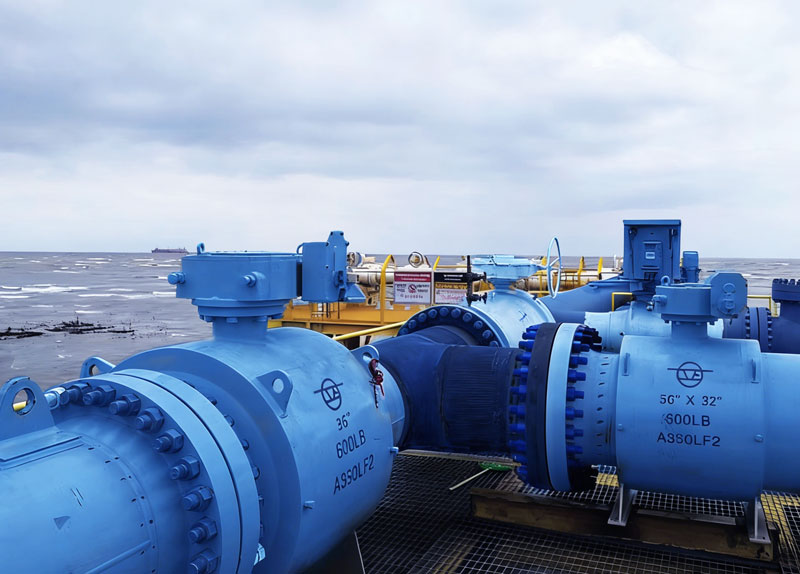
The basic working principle of large diameter ball valves is consistent with standard ball valves—relying on the 90-degree rotational movement of a spherical ball to open or close the fluid flow path. However, due to their larger size (DN300-DN1200) and the need to handle high flow rates and pressures, large diameter ball valves adopt specialized structural designs to ensure operational stability and sealing reliability, differing significantly from small and medium-sized ball valves in component design and force transmission.
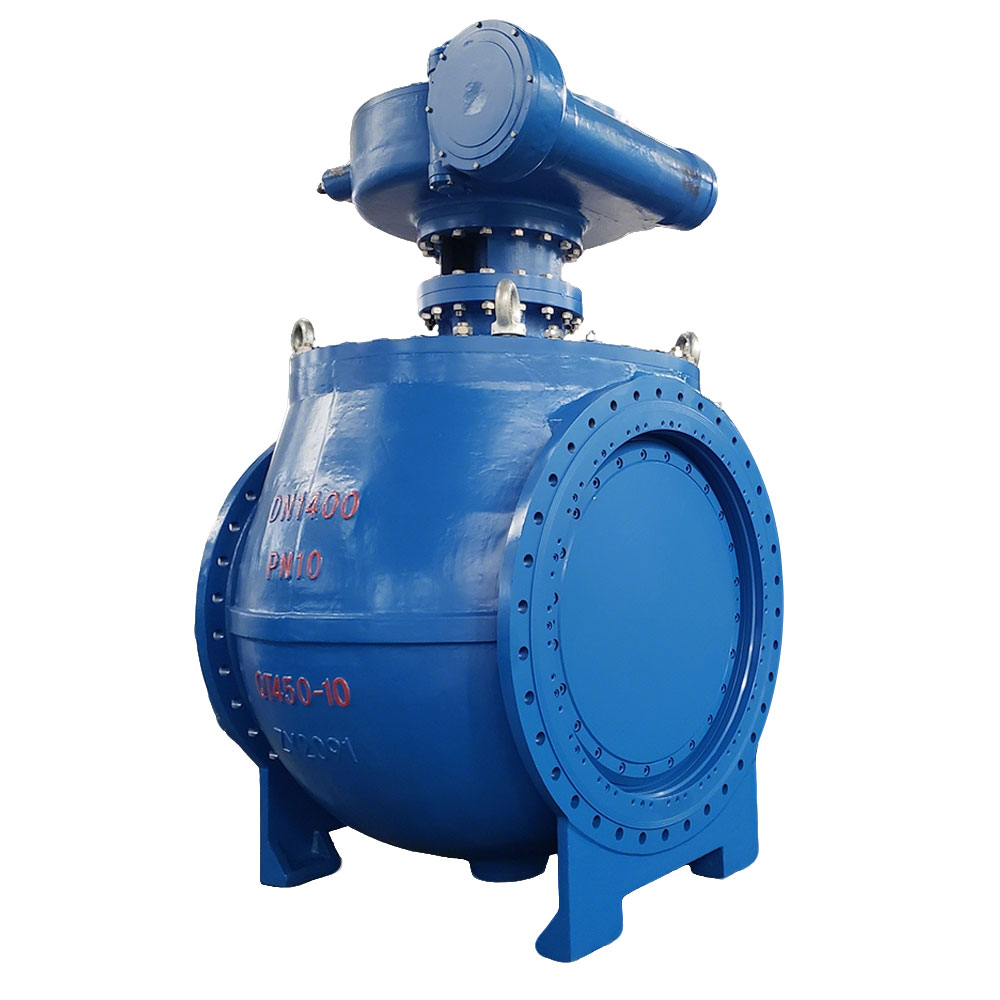
Key components of large diameter ball valves (optimized for heavy-duty industrial use) include:
• Valve Body: As the core load-bearing component, it is usually made of high-strength materials such as carbon steel (A105N), stainless steel (304, 316L), duplex steel (F51, F53, F55), or alloy steel, manufactured via forging or casting processes to withstand high pressure (up to Class 2500 LB/PN100) and harsh media腐蚀 (corrosion). The valve body structure is often full-welded to enhance structural integrity and eliminate potential leakage paths, with flanged (RF, RTJ) or butt-welded (BW) end connections for secure installation in large pipelines.
• Ball: The core flow control component, available in floating ball and trunnion ball designs—trunnion ball valves are more commonly used for large diameters (DN300+) due to their stable structure and low operating torque. The ball is precision-machined with a full-bore design (equal to the pipeline diameter) to minimize pressure drop and facilitate pipeline pigging (cleaning), which is critical for large-flow applications such as oil and gas transportation. High-precision polishing of the ball surface ensures tight sealing with the valve seat.
• Valve Seat: Designed for heavy-duty service, it adopts metal-to-metal sealing (for high temperature and high pressure) or enhanced soft sealing (PTFE, RPTFE, DEVLON) to achieve bubble-tight sealing (API 6D Class V leakage standard). For corrosive media, seat materials such as PEEK or graphite are used, while fire-safe seat designs (complying with API 607) are mandatory for flammable and explosive applications to prevent leakage in case of fire.
• Stem: Made of high-tensile alloy steel (such as F304, F316) with anti-blowout and anti-static designs to ensure operational safety under high pressure. The stem is equipped with low-emission packing seals (complying with ISO 15848-1) to prevent medium leakage, and adopts a rotating or rising design adapted to different installation spaces. For extra-large diameters (DN800+), the stem is often reinforced to avoid deformation during operation.
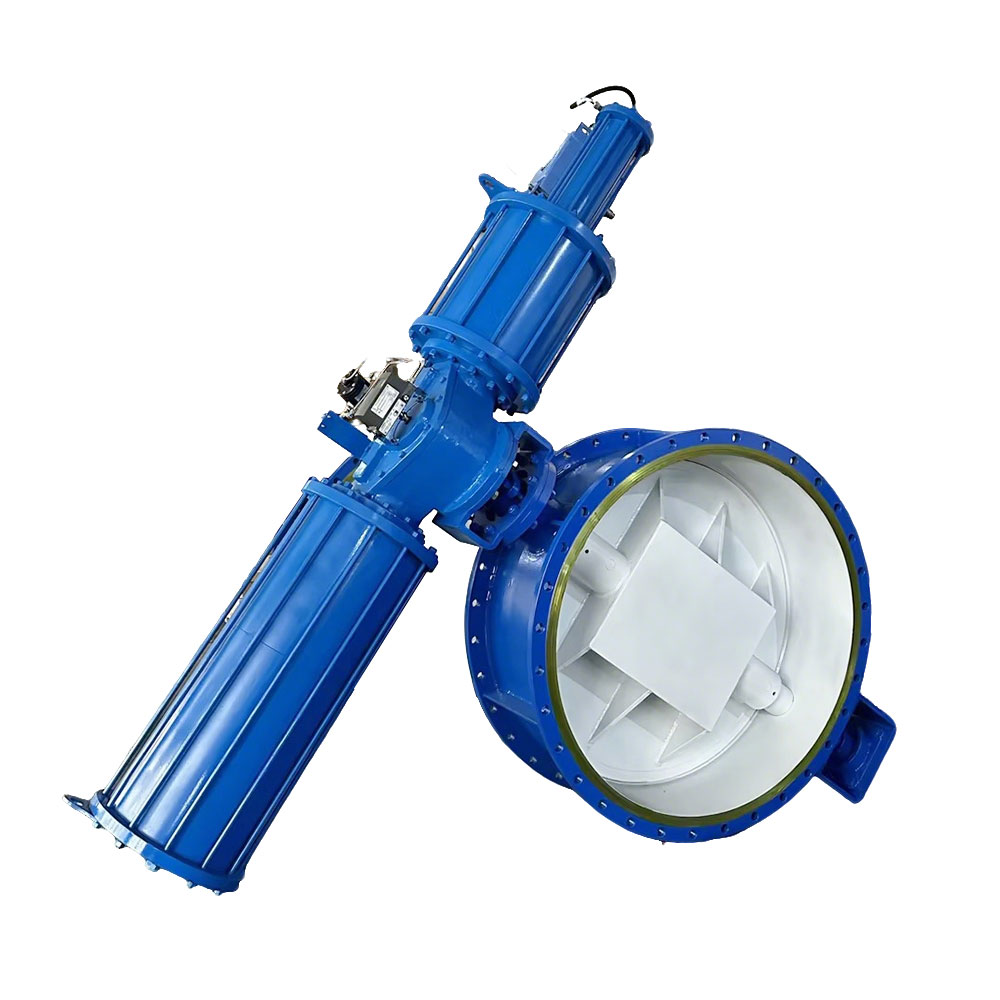
• Actuator: Manual operation is impractical for large diameter ball valves due to high torque requirements, so they are mainly equipped with electric, pneumatic, or hydraulic actuators, often combined with gearboxes to reduce operating torque and enable smooth control. Electric actuators (with PLC/DCS integration) are widely used for remote automation, while pneumatic actuators are preferred for quick emergency shut-off (response time within 10-30 seconds). Some models are equipped with travel limiters to accurately control the ball’s fully open and closed positions.
The working process of large diameter ball valves is divided into three stages: Open (actuator drives the ball to rotate 90 degrees, the ball’s port aligns with the valve body flow channel, allowing unobstructed fluid flow with minimal pressure drop), Transition (ball rotation gradually blocks the flow path, with stable flow control to avoid turbulent flow), and Closed (ball’s solid part completely shuts off the flow channel, achieving reliable sealing to prevent medium leakage). The trunnion ball design distributes the medium pressure evenly, reducing operating torque and ensuring long-term stable operation in heavy-duty scenarios.
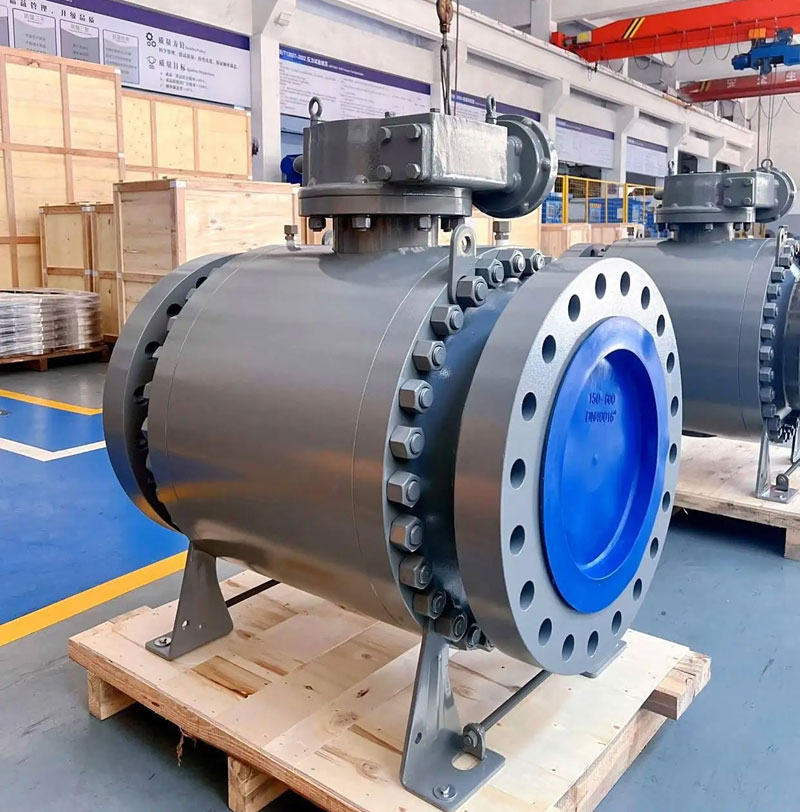
Large diameter ball valves inherit the advantages of standard ball valves while incorporating specialized designs to adapt to large-scale industrial applications. Their unique features (advantages and limitations) are closely related to their size, operating conditions, and industrial requirements, which are crucial for correct selection and application.
• High Flow Capacity & Minimal Pressure Drop: The full-bore design (DN300-DN1200) ensures the ball’s port diameter is equal to the pipeline diameter, minimizing fluid resistance and pressure loss (pressure drop ≤ 0.05MPa under rated flow). This is essential for large-flow applications such as municipal water supply, oil and gas pipelines, and cooling water systems in power plants, reducing energy consumption and improving system efficiency.
• Reliable Sealing Performance: Adopting trunnion ball structure and high-performance sealing materials (metal or enhanced soft seals), large diameter ball valves achieve bubble-tight sealing even under high pressure (up to Class 2500 LB) and high temperature (up to 550°C) conditions. The double block & bleed (DBB) design is optional for critical applications, providing dual sealing to ensure zero leakage, which is critical for toxic, flammable, or corrosive media transportation.
• Stable Operation & Long Service Life: The simple structure with fewer moving parts (ball, stem, seat) reduces wear and tear, while high-strength materials (duplex steel, alloy steel) and precision machining ensure resistance to corrosion, erosion, and fatigue. High-quality large diameter ball valves can operate stably for 10,000+ cycles without major maintenance, with a service life of 15-20 years under normal operating conditions, reducing maintenance costs and downtime.
• Automation Compatibility & Remote Control: Equipped with electric, pneumatic, or hydraulic actuators, they can be integrated into automated control systems (PLC, DCS) for remote operation, monitoring, and fault alarm, reducing manual intervention and improving operational efficiency. Gear-operated designs are also available for manual operation in scenarios where automation is not required, reducing the manpower needed to open and close the valve.
• Bidirectional Sealing & Easy Installation: Bidirectional sealing design eliminates the need to consider installation direction, reducing installation errors and improving construction efficiency. Flanged or butt-welded end connections comply with ASME B16.10 standards, ensuring compatibility with large industrial pipelines and secure installation. The compact structure (compared to large diameter gate valves) saves installation space.
• Self-Cleaning & Medium Adaptability: The rotational movement of the ball during operation scrapes off impurities (sludge, particles) attached to the valve seat, making it suitable for media containing solid particles, such as crude oil, sludge, and industrial wastewater. Various material options (carbon steel, stainless steel, duplex steel) enable adaptation to different media, including corrosive media (sulfuric acid, seawater) and high-temperature media (steam, hot oil).
• High Initial Investment Cost: The large size, high-strength materials (duplex steel, alloy steel), and specialized actuators (electric/hydraulic) lead to higher manufacturing and procurement costs—usually 30%-50% higher than small and medium-sized ball valves. Additionally,supporting control systems (sensors, servo amplifiers) and installation debugging costs increase the initial project investment.
• High Torque & Dependent on Actuators: Large diameter ball valves (above DN500) require high torque to operate, making manual operation impractical and relying entirely on actuators. Actuator failure (power outage, mechanical failure) can lead to valve stuck, affecting system operation, so backup power or manual emergency operation devices are often required.
• Large Size & Installation Constraints: Extra-large diameter ball valves (DN800-DN1200) are bulky (weight up to several tons), requiring hoisting equipment for installation, and have high requirements for installation space (especially for actuators). They are not suitable for narrow installation environments, such as underground pipelines or compact workshops.
• Limited Throttling Capability: Similar to standard ball valves, most large diameter ball valves (except V-type) are designed for on/off control and are not suitable for precise throttling. Partially opening the valve can cause turbulent flow, leading to seat wear and reduced service life; globe valves or butterfly valves are more suitable for throttling in large-flow systems.
• High Maintenance Requirements: Although routine maintenance is simple, actuator maintenance (gearbox lubrication, motor inspection) and seat replacement require professional technology and tools, especially for extra-large diameter valves, which may require pipeline shutdown and hoisting, increasing maintenance difficulty and cost. In extreme temperature environments (-20°C below or 300°C above), additional measures (electric伴热, heat dissipation) are needed to avoid performance degradation.
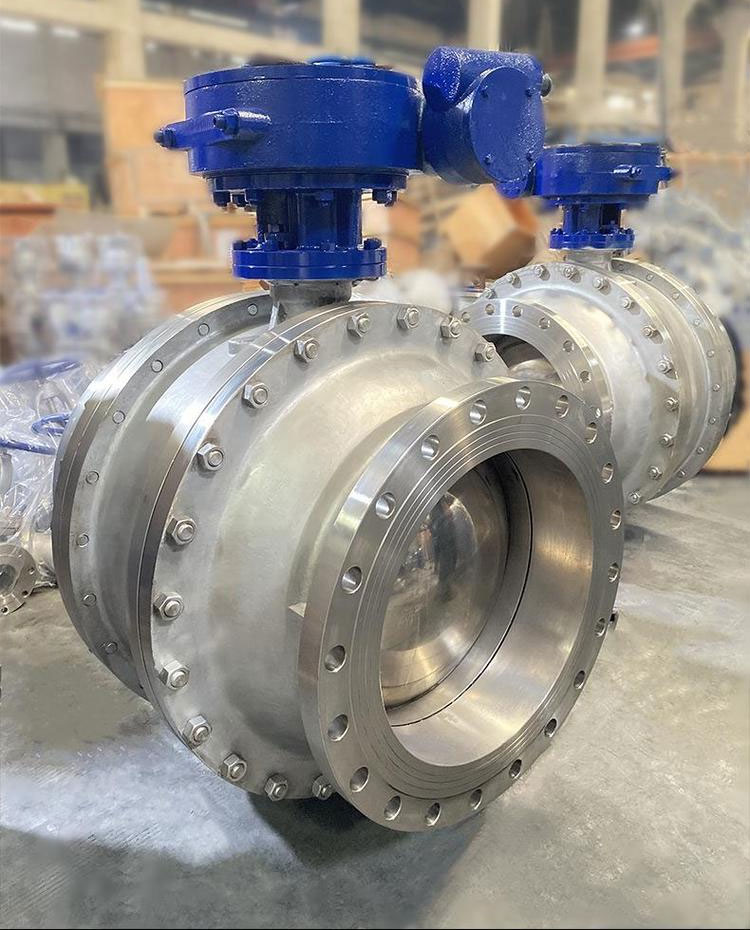
Large diameter ball valves are mainly used in large-scale industrial projects requiring high flow rates, high pressure, and reliable sealing, covering oil and gas, water treatment, petrochemical, power generation, and other core industries. According to industry data, the oil and gas sector accounts for 45% of global large diameter ball valve demand, followed by water and wastewater treatment (30%), making these two industries the primary application fields. They are also widely used in marine engineering, metallurgy, and other fields.
The oil and gas industry is the largest application scenario for large diameter ball valves, which are used in upstream exploration, midstream transportation, and downstream refining, adapting to extreme operating conditions (high pressure, high temperature, corrosive media) and large flow requirements:
• Midstream Oil and Gas Transportation: Deployed in long-distance oil and gas pipelines (DN500-DN1200) for on/off control and isolation, ensuring pipeline integrity and preventing leaks. Full-bore trunnion ball valves (API 6D certified) are preferred to minimize pressure drop and facilitate pipeline pigging, with pressure ratings up to Class 600 LB and temperature resistance ranging from -40°C to 350°C.
• Downstream Refining: Used in refineries (DN300-DN800) to control the flow of crude oil, gasoline, diesel, and other petroleum products during distillation, cracking, and blending processes. Corrosion-resistant materials (duplex steel F55, Inconel 625) are used to handle aggressive media such as sulfuric acid and hydrogen sulfide, with fire-safe and low-emission designs to meet safety and environmental standards.
• Offshore Oil and Gas Platforms: Used in offshore pipelines and processing systems (DN300-DN600) to handle seawater, crude oil, and natural gas, with corrosion-resistant and anti-corrosion designs (brass, duplex steel) to withstand the harsh marine environment, complying with marine industry standards.
Large diameter ball valves are essential in municipal and industrial water treatment systems, adapting to large flow rates and corrosive media (seawater, sewage, chemical agents):
• Municipal Water Supply and Drainage: Used in water treatment plants, booster stations, and municipal main pipelines (DN300-DN1000) to control the flow of raw water, treated water, and recycled water. Stainless steel or brass ball valves are commonly used to prevent rust and ensure water quality, with reliable sealing to avoid water leakage and waste.
• Wastewater Treatment Plants: Deployed in sewage treatment systems (DN300-DN800) to handle wastewater, sludge, and chemical agents (coagulants, disinfectants). Ball valves with corrosion-resistant seats (PTFE) and self-cleaning capabilities are suitable for media containing solid particles and organic matter, ensuring stable operation and easy maintenance.
• Seawater Desalination Plants: Used in seawater desalination systems (DN400-DN1000) to control the flow of seawater, brine, and fresh water, withstanding high salinity and corrosive environments. Duplex steel (F51, F53) ball valves are widely used here for their excellent corrosion resistance, complying with desalination industry standards.
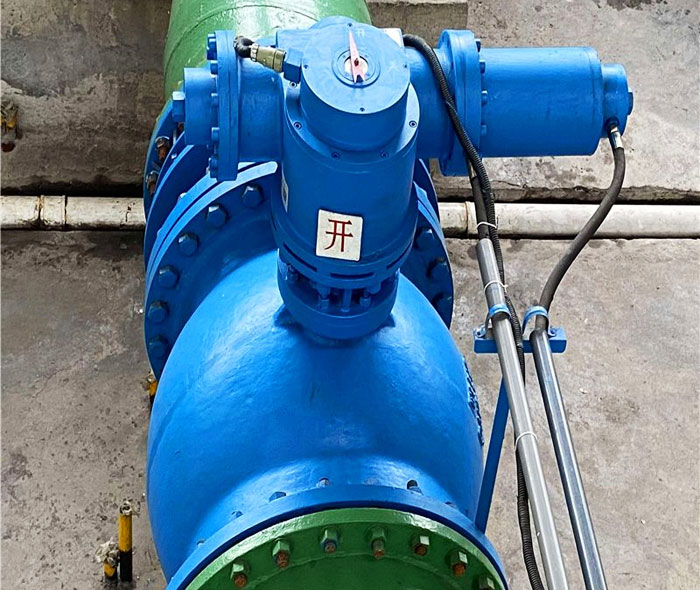
The petrochemical and chemical industry requires large diameter ball valves to handle corrosive, toxic, and flammable media, with high requirements for sealing and safety:
• Petrochemical Processing: Used in ethylene, propylene, and other petrochemical production lines (DN300-DN700) to control the flow of gaseous and liquid media, with explosion-proof actuators for hazardous areas to ensure safe operation. Metal-sealed ball valves are used for high-temperature and high-pressure reactions, while PTFE-sealed ball valves are suitable for corrosive chemical media.
• Chemical Production: Deployed in large-scale chemical reactors, mixers, and pipeline systems (DN300-DN600) to control the flow of acids, alkalis, solvents, and chemical intermediates. The DBB design and low-emission seals are adopted to prevent medium leakage and environmental pollution, complying with ISO 15848-1 standards.
In thermal power, hydropower, and nuclear power plants, large diameter ball valves are used in cooling water, steam, and coolant systems to ensure stable operation of power generation equipment:
• Thermal Power Plants: Used in boiler feedwater, condensate, and cooling water systems (DN300-DN1000) to control the flow of water and steam, with high-temperature and high-pressure ball valves (withstanding temperatures up to 550°C and pressures up to 30 MPa) to adapt to the harsh operating environment of thermal power plants.
• Nuclear Power Plants: Used in primary and secondary circuits (DN300-DN600) to control the flow of coolant (water, helium), with high safety and reliability, meeting nuclear-grade standards (ASME III) to prevent radioactive leakage, and adopting fire-safe and anti-seismic designs to ensure operational safety in extreme scenarios.
• Hydropower Plants: Deployed in water intake and drainage systems (DN500-DN1200) to control the flow of water, with corrosion-resistant materials and reliable sealing to adapt to long-term immersion in water, ensuring stable operation of hydropower generation systems.
• Marine Industry: Used in ship pipelines (fuel, cooling, ballast systems) with DN300-DN600, handling seawater, fuel oil, and other media, with corrosion-resistant ball valves (brass, stainless steel) to withstand the harsh marine environment, complying with marine industry standards (IMO).
• Metallurgical Industry: Deployed in large-scale steel plants (DN300-DN800) to control the flow of cooling water, molten steel, and slag, with high-temperature and wear-resistant designs to adapt to the high-temperature and dusty operating environment of metallurgical production.
• Large-Scale Industrial Circulation Systems: Used in cooling water circulation systems of large factories (chemical, electronics, pharmaceutical) to control large-flow cooling water, ensuring stable operation of production equipment and improving energy efficiency.
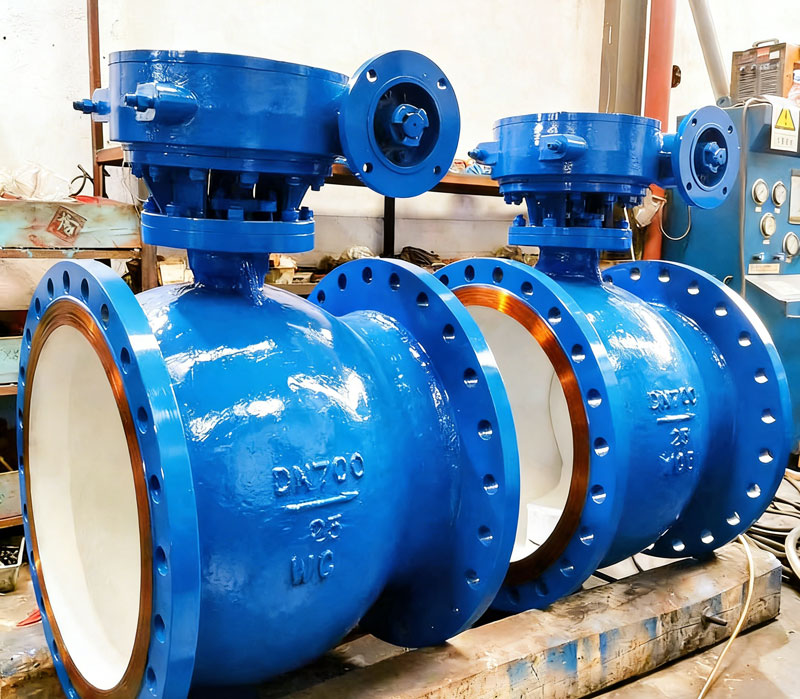
Selecting the right large diameter ball valve is critical to ensuring system efficiency, safety, and service life. The following key factors should be considered based on operating conditions and application requirements:
• Medium Characteristics: Select valve body and seat materials based on the medium’s corrosiveness, viscosity, and solid particle content. For example, duplex steel (F55) for corrosive media (seawater, sulfuric acid), carbon steel for non-corrosive media (water, oil), and metal seats for high-temperature media (steam). For media containing solid particles, choose self-cleaning ball designs and wear-resistant seat materials.
• Operating Conditions: Determine the valve’s pressure rating (PN16-PN100/Class 150-Class 2500) and temperature range (-40°C to 550°C) based on the system’s working pressure and temperature. For high-pressure differential applications, select trunnion ball valves to reduce operating torque and avoid cavitation.
• Flow Control Requirements: Choose full-bore ball valves for large-flow, low-pressure-drop applications (oil and gas pipelines, water supply); choose V-type ball valves for precise throttling requirements; choose three-way ball valves for flow diversion or mixing in complex systems.
• Actuator Selection: Select electric actuators for remote automation and precise control (integrated with PLC/DCS); select pneumatic actuators for quick emergency shut-off (response time ≤30 seconds); select hydraulic actuators for extra-large diameter valves (DN1000+) or high-torque scenarios. Equip with backup power or manual emergency devices to ensure reliable operation.
• Standards and Certifications: Choose ball valves complying with international standards such as API 6D (oil and gas), ISO 9001 (quality management), CE (safety), and API 607 (fire-safe) to ensure product reliability and compliance with industry requirements. For nuclear power applications, select valves meeting ASME III nuclear-grade standards.
• Installation and Maintenance: Consider the installation space to select the appropriate valve structure (full-welded, flanged); choose valves with easy maintenance designs (detachable seats, replaceable packing) to reduce maintenance difficulty and cost. For narrow installation spaces, select compact actuator designs.
Large diameter ball valves (DN300+) are core components of large-scale industrial fluid control systems, with a simple working principle, excellent performance, and wide application range. Their high flow capacity, reliable sealing, and automation compatibility make them indispensable in oil and gas, water treatment, petrochemical, power generation, and other industries. As the global large diameter ball valve market continues to grow (expected to reach USD 8.2 billion by 2035 with a CAGR of 4.1%), understanding their working principle, features, and application scenarios is crucial for industrial buyers, engineers, and procurement professionals to make informed selection decisions.
Choosing the right large diameter ball valve (material, structure, actuator) can improve system efficiency, reduce maintenance costs, and ensure safe and stable operation. By following the selection tips and adhering to international standards, you can maximize the value of large diameter ball valves in large-scale industrial fluid control systems, adapting to the growing demand for high-efficiency, safe, and environmentally friendly industrial equipment.
Tags: Large diameter ball valve large bore ball valve DN300 ball valve API 6D ball valve trunnion mounted ball valve
Various Models for Your Choice

Have be any question? Feel free to Contact.



WEIZIDOM Group is specializes in the manufacturing, sale and after-sale service of valves, pipe fittings, water meters, flow meters and other pipeline accessories.
Copyright © 2026.WEIZIDOM All rights reserved.