Language


More Language
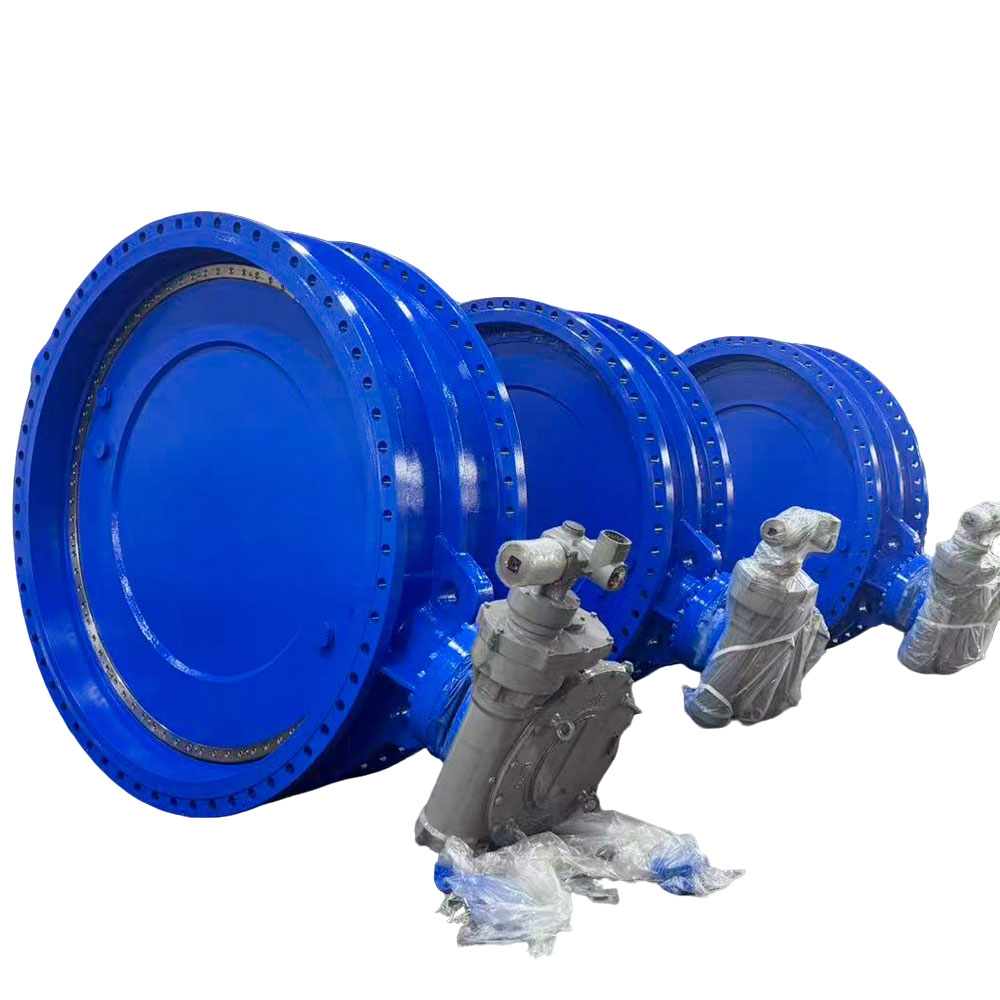
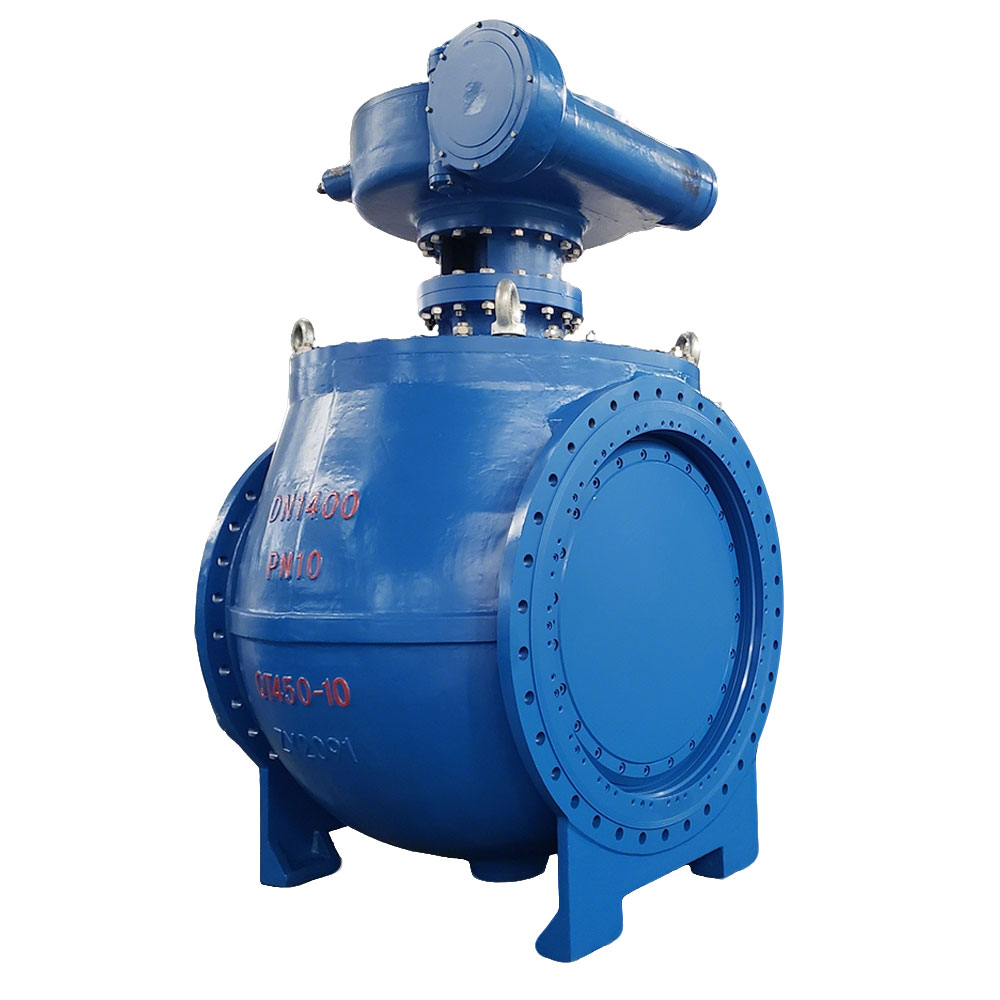
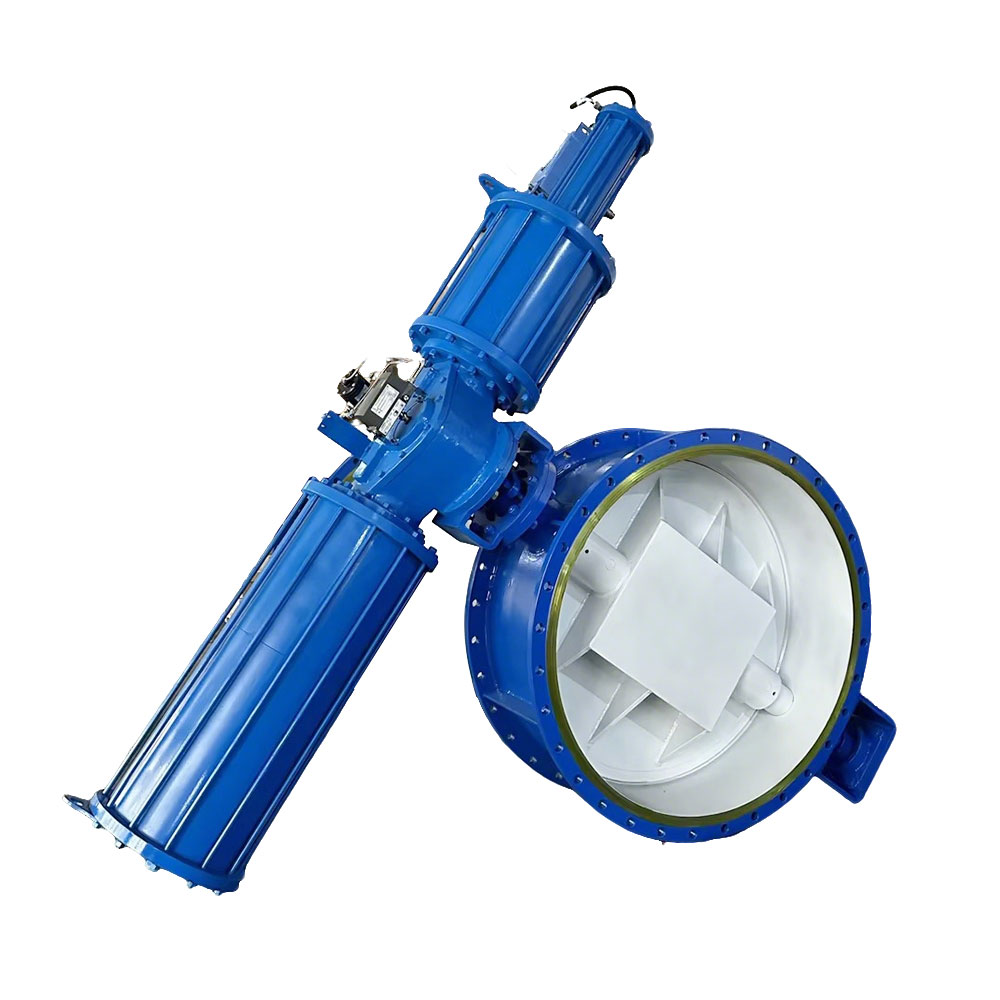
Language A large-diameter butterfly valve is a quarter-turn rotary valve typically defined as having a nominal diameter (DN) ≥ 600 mm (DN600, DN800, DN1000, DN1200, DN1400, DN2000 and above).It consists of a body, a circular disc, a stem, a seat seal, and an actuator.
A large-diameter butterfly valve is a quarter-turn rotary valve typically defined as having a nominal diameter (DN) ≥ 600 mm (DN600, DN800, DN1000, DN1200, DN1400, DN2000 and above).It consists of a body, a circular disc, a stem, a seat seal, and an actuator. The disc rotates 0°–90° around the stem to shut off, throttle, or regulate flow in large-volume pipelines.
Key characteristics:
Compact structure, light weight, small installation space;
Low flow resistance, fast opening and closing;
Suitable for large flow rates and low-to-medium pressure systems;
Widely used in water supply, wastewater, hydraulics, power plants, and petrochemical systems.
Soft-sealed butterfly valve
Seat: EPDM, NBR, PTFE, etc.
Features: bubble-tight leakage, low pressure, normal temperature
Application: water, sewage, clean gas.
Hard-sealed butterfly valve
Seat: metal-to-metal, stellite alloy
Features: high temperature resistance, high pressure resistance, wear resistance
Application: steam, high-temperature oil, gas, abrasive media.
Center (Concentric) butterfly valve
Simple structure, low cost; used for low-pressure, non-critical systems.
Double eccentric butterfly valve
Stem offset from center and body axis; reduces friction, improves sealing.
Triple eccentric butterfly valve
Based on double eccentricity plus a conical sealing surface;achieves zero leakage under high pressure and temperature;the most common type for high-performance large-diameter applications.
Flanged
Lug type
Wafer type
Double flange (for large pressure pipelines)
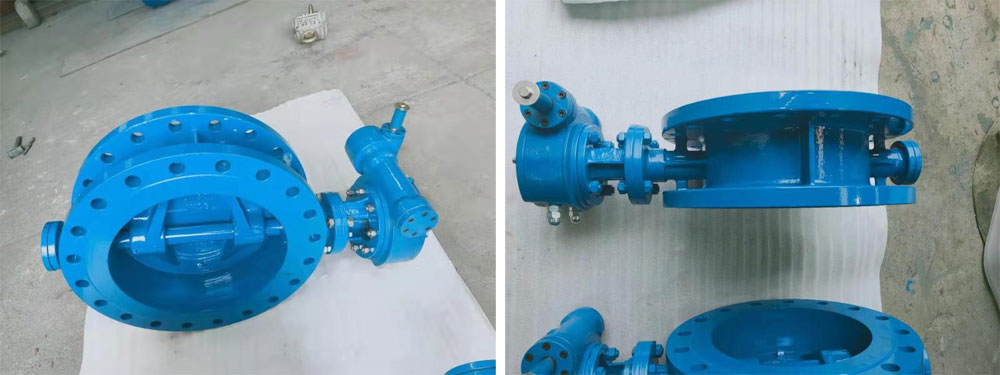
Large-diameter butterfly valve are generally designed for:
Pressure class: PN6, PN10, PN16, PN25 (mostly low to medium pressure)
Temperature range:
Soft seal: −20 °C ~ +120 °C
Hard seal: up to 450 °C or higher
Media:Water (raw water, circulating water, sewage), air, gas, oil, weak corrosive liquids
Flow mode: On-off control or flow regulation
Environment: Outdoor, buried, pump stations, water diversion projects, coastal and industrial environments
Determine diameter
Match pipeline nominal diameter (DN600 and above).
Pressure and temperature
Low pressure & normal temperature → soft-sealed concentric or double-eccentric
High pressure & high temperature → triple-eccentric hard-sealed
Leakage requirement
Tight shutoff → triple eccentric or soft-sealed with zero-leakage seat.
Medium properties
Clean water → EPDM soft seal
Abrasive / high-temperature → metal hard seal
Operation frequency
Frequent switching → eccentric structure to reduce wear.
Installation space
Limited space → wafer or lug butterfly valve
High stability requirement → flanged type
Actuator selection
Manual: small diameter, infrequent operation
Electric / pneumatic / hydraulic: automatic control, large diameter
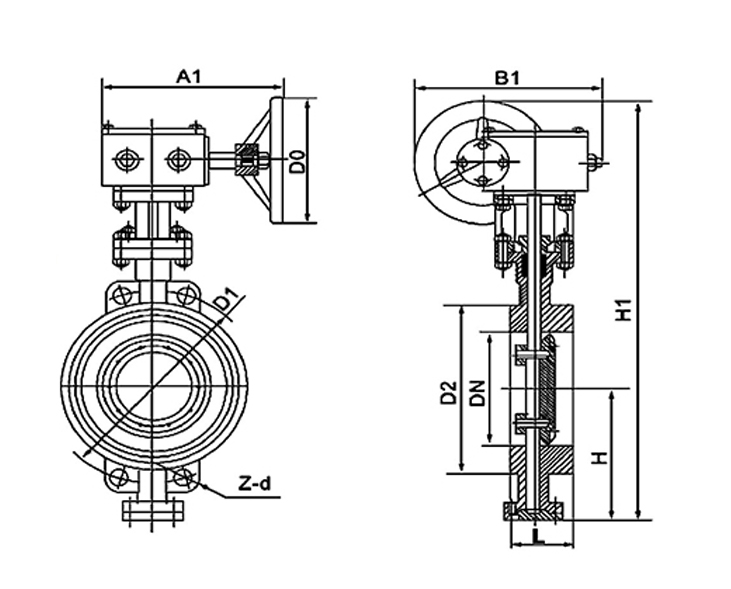
Manual operation
Hand lever, worm gear; for small loads and infrequent use.
Electric actuator
Electric motor + gearbox; remote control, automatic regulation; most widely used for large diameter.
Pneumatic actuator
Piston or diaphragm type; fast action, suitable for explosion-proof areas.
Hydraulic actuator
High torque, stable performance; for ultra-large diameter and high-pressure systems.
(1) Routine Maintenance
Regularly check for external leakage at flange and stem packing.
Lubricate stem and gearbox periodically.
Monitor operating torque; abnormal torque indicates wear or seizure.
Keep the actuator clean and dry; protect electrical parts from moisture.
Inspect disc and seat for wear, scratch, or deformation.
Replace aged gaskets, O-rings, and packing.
Check concentricity and alignment of the stem.
Clean scale, sediment, and debris inside the valve body.
Leakage at seat → replace seal ring or adjust torque.
Stem leakage → tighten or replace packing.
Difficult operation → clean debris, add lubricant, repair eccentricity.
Abnormal noise → check disc vibration, loose fasteners.
Store in dry, ventilated environment.
Keep disc slightly open to avoid seat compression deformation.
Protect flanges and machined surfaces from corrosion.
Various Models for Your Choice

Have be any question? Feel free to Contact.



WEIZIDOM Group is specializes in the manufacturing, sale and after-sale service of valves, pipe fittings, water meters, flow meters and other pipeline accessories.
Copyright © 2026.WEIZIDOM All rights reserved.